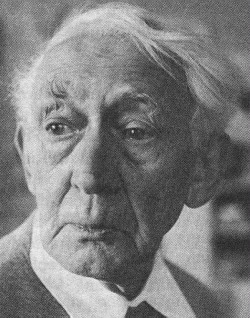
A creative spirit – writer, draughtsman, painter. Born on 4 May 1889 in Arnswalde (Neumark), died on 29 October 1976 in Munich: Richard Seewald was a German-Swiss painter, printmaker and author.
- Origin
- Arnswalde, Neumark
- Occupation
- Painter, printmaker, illustrator, writer
- Born
- 4 May 1889, Arnswalde
- Died
- 29 October 1976, Munich
- Grave
- Ronco sopra Ascona
- Papers
- Germanisches Nationalmuseum, Nuremberg
1889–1911
Beginnings in Munich
Draughtsman, painter, illustrator and writer Richard Seewald was born on 4 May 1889 in Arnswalde, the son of well-to-do parents. In 1909, at his father’s wish, he began studying architecture at the Technical University in Munich, but soon turned to painting as a self-taught artist and abandoned his studies for the sake of art.
After the weekly magazine “Die Jugend” accepted some drawings he had made while still at school, Seewald also drew caricatures for Munich’s “Meggendorfer Blätter” and Berlin’s “Lustige Blätter”, earning his living that way. In Munich he lived as a bohemian among artists – and there he met his future wife.
1911
London and Paris
In 1911 the couple travelled to London, where on the spur of the moment, on 11.11.1911, he married his fiancée Uli – Emma Margarethe Trotsch. From London they went on to Paris, where Richard Seewald showed drawings at the Salon d’Automne and sold them successfully.
1911–1924
New Secession and the art of the book
Seewald also found success in Germany: Heinrich Thannhauser’s Moderne Galerie, which regularly presented young Munich artists, showed a selection of his prints for the first time. In 1913, during a stay on the island of Rab, he painted his first oil painting. That November the New Secession was founded, which Seewald soon joined; shortly afterwards he also became a member of the Deutscher Künstlerbund.
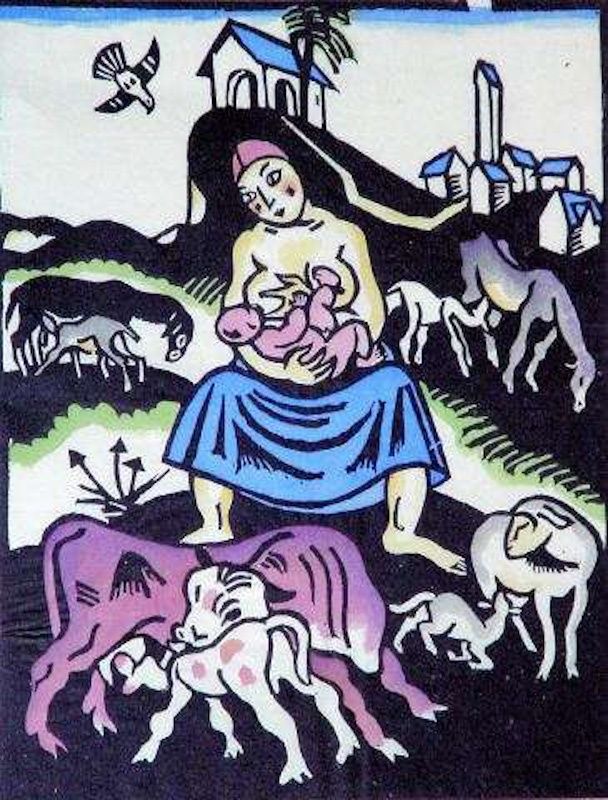
Seewald illustrated the little book “Die Schnupftabaksdose” for Hans Bötticher – better known as Joachim Ringelnatz – and during the years of inflation became a sought-after illustrator of precious editions, such as Daniel Defoe’s “Robinson Crusoe” and Heinrich von Kleist’s “Penthesilea”. He also illustrated his own first book, “Tiere und Landschaften” (Animals and Landscapes).
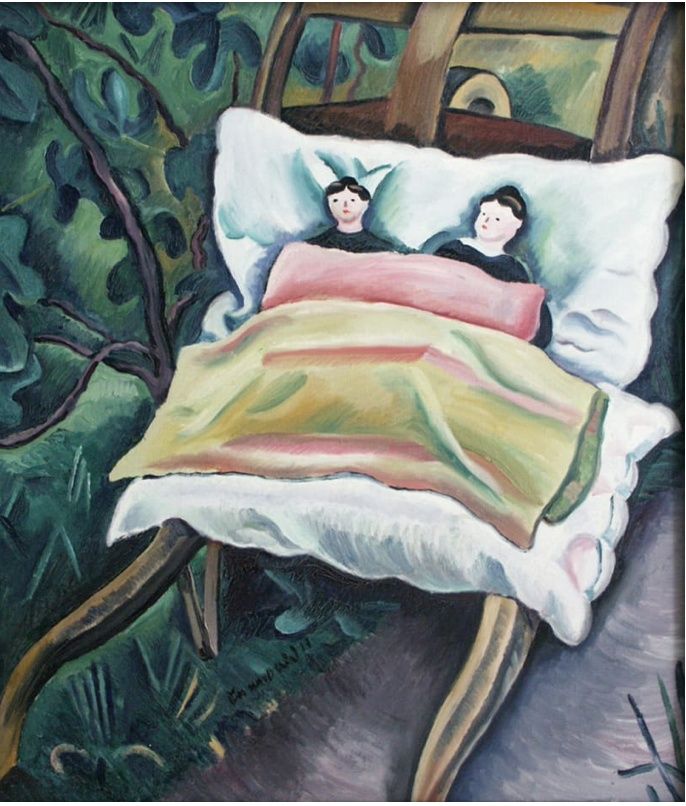
In 1919 the Munich dealer Hans Goltz staged an important and successful solo exhibition. Seewald travelled again and again to the Mediterranean – to France, Italy and Greece – and kept illustrating his own books and those of others, while his name became better known and his work more popular year by year.
1924–1931
Professor in Cologne
In 1924, aged thirty-five and out of the blue, Seewald was appointed professor at the Kölner Werkschulen while staying in Positano. He became a teacher greatly loved by his students and respected throughout Cologne. In the district of Rodenkirchen he built his first house – one of the first true Bauhaus houses in Cologne, which still stands today. Its house-warming party was, in his own recollection, the high point of his years in Cologne.
In 1929, partly under the influence of Theodor Haecker, he converted to Catholicism at the Collegio Papio in Ascona, and went on to take commissions for murals in sacred spaces – in 1931 he painted the large altarpiece for Dominikus Böhm’s church Stella Maris on Norderney.
1931–1948
Ronco sopra Ascona
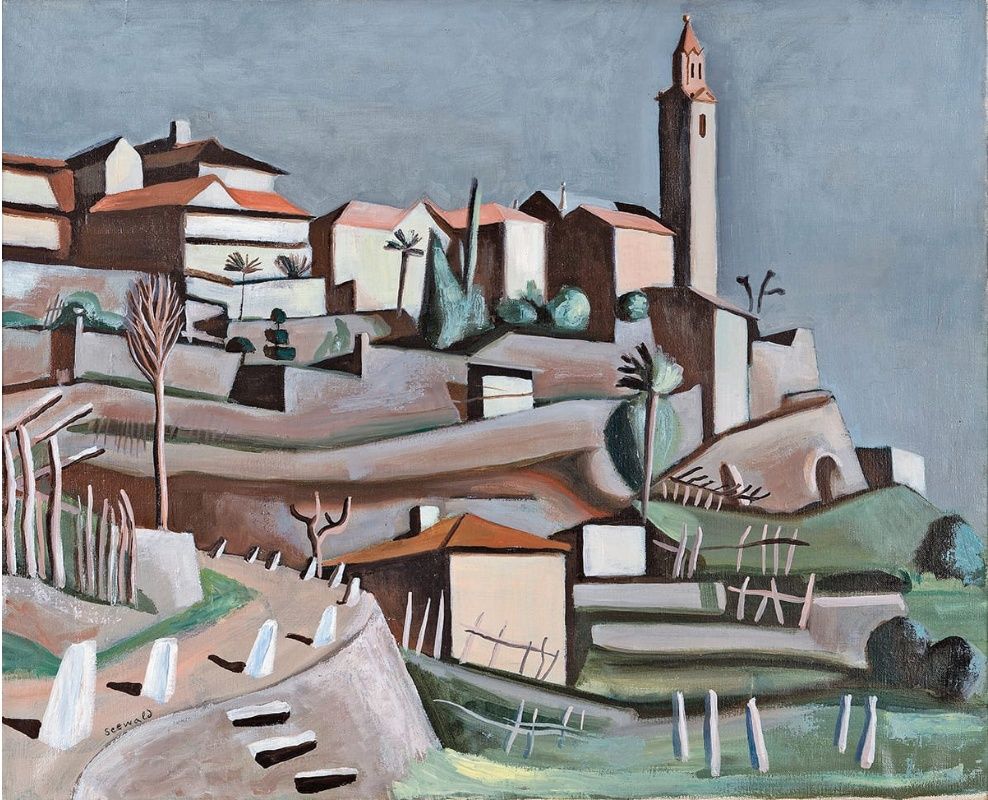
Though prosperous and accepted by the city’s upper middle class, Seewald felt increasingly ill at ease in Germany. Under the impression of the repressive cultural-political climate he decided in 1931 to emigrate for good to Switzerland – to Ronco sopra Ascona on Lake Maggiore, where he had bought a small house on a dreamlike plot on the slope above Porto Ronco. In 1939 he became a Swiss citizen. From then on he painted and wrote with equal intensity.
1948–1961
Return and the Academy
After the end of the Nazi dictatorship Seewald set foot on German soil again in 1948; yet only in 1954 did he regain a foothold in the cultural life of the Federal Republic, when he accepted a professorship at the Academy of Fine Arts in Munich. Four years later, in 1958, he resigned after disagreements with the Academy’s board.
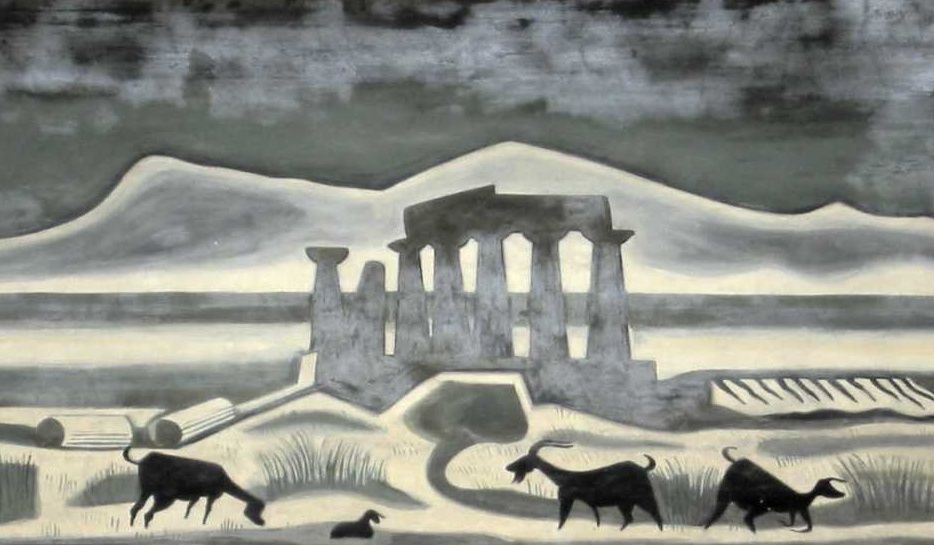
The principal work of his Munich years are the frescoes in the arcades of the Hofgarten. The Zurich art historian Peter Meyer had suggested that Seewald was the natural successor to Carl Rottmann for this commission – no other artist of the time had travelled Greece so intensively and recorded it in hundreds of pictures. The fifteen frescoes – Greek landscapes in shades of grey, many inscribed with verses by Homer, Pindar, Sappho, Hölderlin and Goethe – were painted in about four months in 1961 and can still be seen today.
1967–1976
Late work and legacy
After his wife’s death on 4 May 1967, Seewald burned some 150 of his paintings along with hundreds of sketches, designs and letters. In 1968 he created windows and murals for the Herz-Jesu-Kirche in Munich-Neuhausen; the last of his many church commissions was the Genesis cycle in the same church’s parish hall in 1976.
In 1976, before travelling to the opening of an exhibition at Kunsthaus Lempertz in Cologne, Seewald – as if he sensed it – laid the keys of his house on the dining table and left his home in Ronco for the last time. He died after a highly successful exhibition and was buried in Ronco sopra Ascona beside his beloved wife.
He left his house and his paintings to the Swiss state, in gratitude for the refuge he had found there in dark times. The Uli und Richard Seewald-Stiftung, which he founded, carries this legacy and to this day offers international artists a place to live and work, year after year. His written estate and sketchbooks he bequeathed to the Germanisches Nationalmuseum in Nuremberg.
A series of regular exhibitions across Europe continues to attest to the appeal of his work.
1937
“Degenerate art”
As early as 1933 Seewald was defamed as “degenerate”; in 1934 his triptych for an old people’s home in Rüstringen was removed. In 1937 the Nazis confiscated his works from German museums. The confiscation inventory of the Forschungsstelle “Entartete Kunst” at the Freie Universität Berlin lists 163 works from 23 museums – 155 prints, 4 watercolours and 4 paintings.
Most confiscations
- Hamburger Kunsthalle32
- Kaiser-Friedrich-Museum Magdeburg22
- Museum Folkwang Essen20
- Wallraf-Richartz-Museum Köln17
The four confiscated paintings
- Roter Hohlweg (1921)Bayerische Staatsgemäldesammlungen, München – Whereabouts unknown
- Ansicht von Girgenti (1925)Wallraf-Richartz-Museum, Köln – Recorded as destroyed in the Nazi inventory
- Bildnis meines HundesWallraf-Richartz-Museum, Köln – Recorded as destroyed in the Nazi inventory
- Landschaft mit MaisfeldMuseum für Kunst und Kunstgewerbe, Stettin – Recorded as destroyed in the Nazi inventory
In collections
- Nationalgalerie, Staatliche Museen zu Berlin, BerlinFlusslandschaft mit Pferden (1923), Die Weinlese (1921)
- Städtische Galerie im Lenbachhaus, MünchenLandschaft (Provence), woodcut (1914)
- Kunstpalast, DüsseldorfCanaan (1915), The Sun of Elba (1921)
- Deutsches Museum, MünchenCologne Airport (1928)
- Altonaer Museum, HamburgTapestries for the Reemtsma house (1932)
- Leopold-Hoesch-Museum, Düren
- Museo Comunale d’Arte Moderna, AsconaSeewald room of the foundation, with his own collection (Klee, Marc, Utrillo, Kubin, Beckmann and others)
- Los Angeles County Museum of Art (LACMA), Los AngelesOn the beach, watercolour (1912)
- Leicester Museums – German Expressionism, LeicesterThe Shepherd
- Deutsches Kunstarchiv im Germanischen Nationalmuseum, NürnbergPapers 1911–2002: sketchbooks, diaries, manuscripts, correspondence
According to Wikidata also: Museum of Modern Art (New York), National Gallery of Art (Washington), Minneapolis Institute of Art, Stedelijk Museum (Amsterdam), Museum Ludwig and Wallraf-Richartz-Museum (Cologne), Bavarian State Painting Collections.
Honours and students
Honours
- Prussian State Medal1929
- Member of the Bavarian Academy of Fine Arts (resigned 1973)1957
- Bavarian Order of Merit1966
- Great Cross of Merit of the Federal Republic of Germany
- Richard-Seewald-Bogen, a street in Munich-Aubing1984
Students in Cologne (1924–1931)
Hilde Rubinstein · Joseph Fassbender · Karin Kluth (van Leyden) · Peter Strausfeld · Wilhelm Holzhausen · Paul Wunsch · Edvard Frank · Leni Moch
Students in Munich (1954–1958)
Reinhold Heller · Hans Wuttig · Helmut Ackermann · Wanda Zacharias · Anemone Schneck-Steidl · Willibrord Haas
His Munich students formed the group “Quattrocento” in 1955.
today
The foundation
The Fondazione Richard e Uli Seewald in Ronco sopra Ascona manages his estate and works and still offers his house and studio to visual artists, writers and musicians from all over the world for stays of three weeks to three months. A dedicated room in the Museo Comunale d’Arte Moderna in Ascona shows Seewald’s work and his collection.
Further reading
- Eva Chrambach: Seewald, Richard. In: Neue Deutsche Biographie 24 (2010) ↗
- Fondazione Richard e Uli Seewald, Ronco sopra Ascona ↗
- mural.ch – Wandbilder, Fenster und Mosaiken von Richard Seewald ↗
- Forschungsstelle „Entartete Kunst“, FU Berlin – Beschlagnahmeinventar ↗
- Nachlass im Deutschen Kunstarchiv (Kalliope) ↗
- Rolf Kussl: Hellas im Hofgarten (Schnell & Steiner 2026) ↗
- Wikipedia (deutsch) ↗
- Wikidata Q2150582 ↗
- Deutsche Digitale Bibliothek ↗
- Wikimedia Commons ↗